
Getting Your Garage Door Ready for Winter: The Short Answer
Check the weatherstripping, lubricate the moving parts, test the balance, and make sure your opener has a way to work if the power goes out. In North Texas, winter doesn't mean months of snow — it means sharp cold fronts, occasional ice, and big temperature swings that can catch a garage door off guard if it hasn't been touched since spring.
That swing matters more than people think. A door that's been baking in summer heat for months, with springs and hinges that haven't been lubricated since last year, doesn't transition smoothly into 30-degree mornings. Metal contracts, grease thickens or dries out, and small issues that were tolerable in July become real problems the first time a cold front blows through.
Seal Up the Gaps Before the Cold Fronts Arrive
The bottom seal and side weatherstripping on a garage door do more work than most homeowners realize. In summer they keep out dust and bugs; in winter they keep out wind-driven cold air, especially if your garage shares a wall with living space or you use it as a workshop.
- Bottom seal: Look for cracking, flattening, or gaps where daylight shows through. A seal that's lost its shape won't flex against the slab the way it should, and cold air will find its way in along the whole width of the door.
- Side and top weatherstripping: Check for brittleness. Rubber that's spent a summer in Texas heat can harden and crack, which is exactly when it stops sealing against wind.
- Door panels themselves: If you have an older steel door without insulation, consider whether draft is actually coming through the panels, not just the edges. This matters more if the garage is attached and uninsulated garage air affects an adjacent room.
Replacing a bottom seal is a simple, inexpensive fix that pays off every time a front rolls through.
Lubricate Before the First Hard Freeze, Not After
Hinges, rollers, and the torsion spring itself all rely on lubrication to move the way they're supposed to. Summer heat breaks down lighter lubricants faster than people expect, so by fall a lot of doors are running drier than the homeowner realizes.
- Use a silicone-based garage door lubricant, not household oil or WD-40, which attracts dust and grit rather than repelling it.
- Apply to the hinges, roller stems (not the nylon rollers themselves), the torsion spring, and the lift cables' bottom fixtures.
- Run the door up and down a few times to work the lubricant in, and listen for grinding or squealing that wasn't there before.
If the door sounds rough or hesitates partway through its cycle, that's worth a closer look before cold weather makes the problem worse. Metal parts contract slightly in cold temperatures, and a spring or cable that's already under strain has less margin for error.
Cold Weather Is Hard on Springs — Here's Why
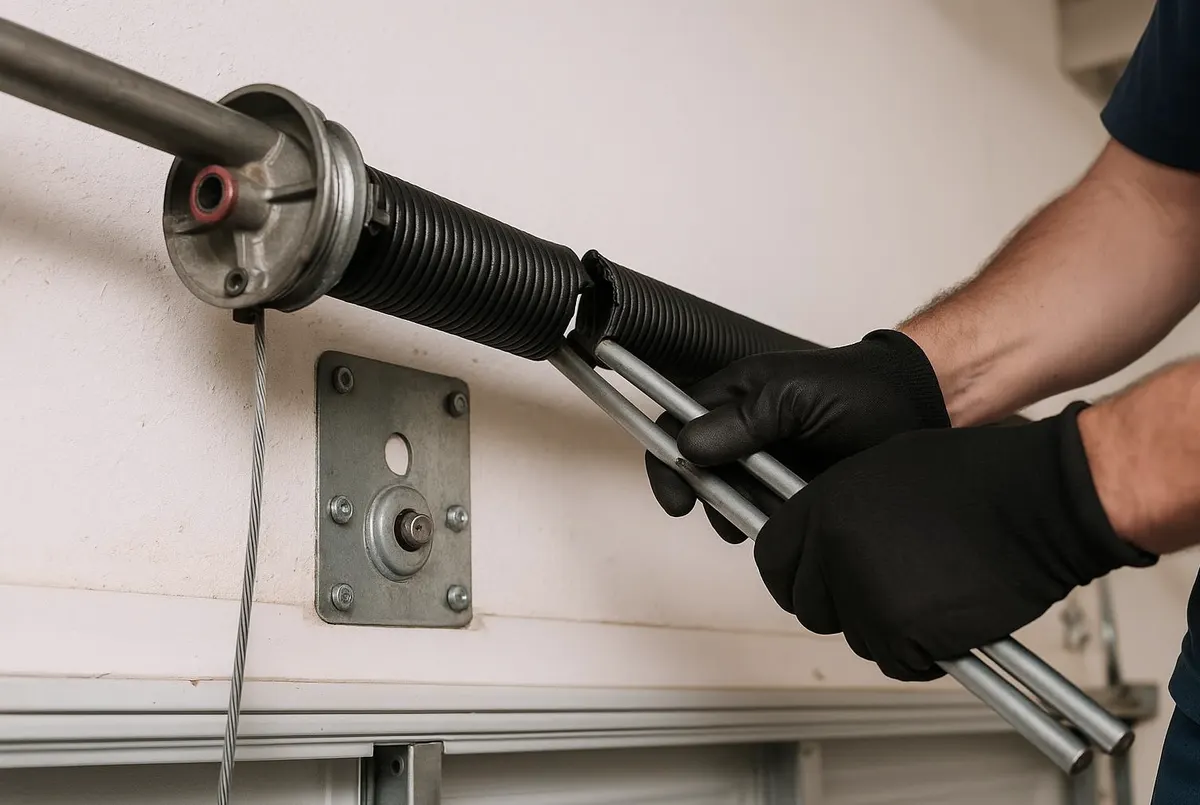
Torsion springs lose a bit of flexibility as temperatures drop, and in North Texas that's less about deep freezes and more about the up-and-down swings — a 70-degree afternoon followed by a 28-degree morning. Metal fatigue adds up over repeated cycles like that, and a spring that was already near the end of its lifespan is more likely to show it in winter.
Warning signs include the door feeling heavier than usual when opened manually, the opener straining or making a labored sound, or the door not sitting level when it's partway open. None of these are things to wait out — a spring that fails does so suddenly, and it can take cables and hardware with it.
Plan for Power Outages and Ice
The northern part of the Metroplex sees occasional ice storms, and ice means downed lines and power outages more often than it means a foot of snow. If your opener doesn't have a battery backup, a winter outage leaves you manually releasing the door — fine in a pinch, but not something you want to be learning how to do for the first time in the dark during a storm.
- Know where the manual release cord is and test it once before winter, not during an emergency.
- If you're due for a new opener, battery backup models are worth the upgrade for exactly this reason.
- Keep a flashlight near the garage entry door, since power outages and dark winter evenings tend to overlap.
If the Garage Is a Workspace, Think About Insulation
A lot of homeowners use the garage as a workshop, gym space, or overflow storage that needs to stay above freezing. If that's the case, an insulated garage door panel makes a real difference, and it's worth weighing against the cost of just heating an uninsulated space all winter. It's a bigger investment than sealing and lubrication, but one that pays off every season, not just this one.
When to Call Plano Garage Door
If your door is heavy to lift, the opener strains, or you're hearing grinding or popping sounds that didn't used to be there, don't wait for the first freeze to find out why. That's exactly the kind of issue our garage door maintenance visits are built to catch — we check spring tension, hardware wear, and weatherstripping condition before cold weather turns a minor issue into a stuck door on a 28-degree morning. If a spring has already failed or is clearly on its way out, our spring replacement service gets it swapped safely and correctly, since a torsion spring under tension isn't something to DIY.
If you're in Plano, Frisco, Allen, McKinney, Richardson, The Colony, Carrollton, or Murphy and want your garage door checked before winter sets in, call Plano Garage Door today to schedule a visit.