
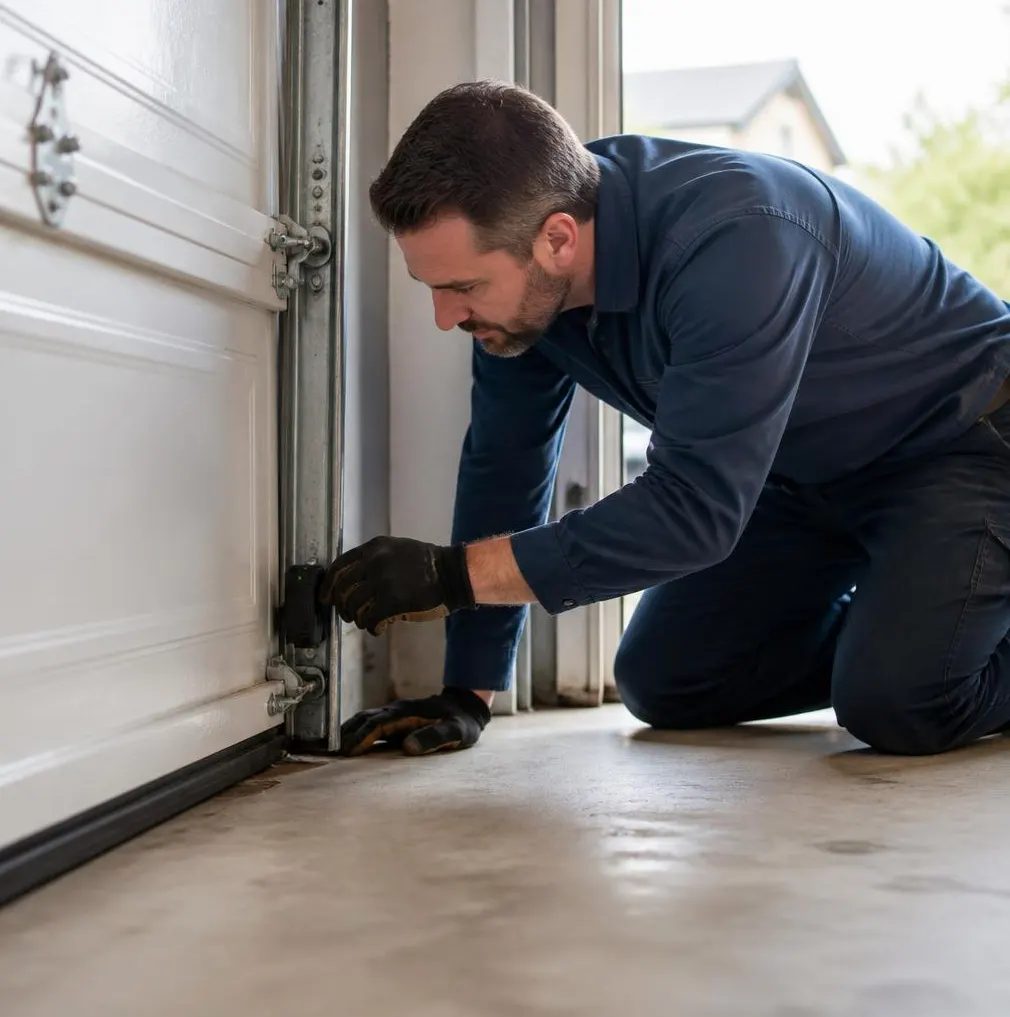
What Waiting One More Season Actually Costs
Skip a storm inspection this fall and the bill doesn't show up until the wind is already inside your garage. A door that buckles under pressure during a line of thunderstorms doesn't just need a new panel — it can let wind get under your roofline, crack drywall, soak stored boxes and tools, and in the worst cases cause structural damage that turns into a drawn-out insurance claim. For a business, a damaged overhead door means a closed loading dock and lost hours while you wait on repairs. None of that is cheap compared to an hour of inspection and a few worn parts replaced now, before the next front moves through.
Why the Garage Door Is the Weakest Wall in the House
Every other wall in your home is a solid, continuous surface. The garage door is a large moving panel held in place by thin tracks, rollers, hinges, and a spring system doing all the structural work that a wall normally does on its own. When straight-line wind hits the front of a house, pressure builds against every surface — and the garage door, being the biggest and least rigid opening, is usually the first thing to flex, bow, or blow in. Once it fails, wind rushes into the garage and pressurizes the whole house from the inside, which is how roofs get lifted and ceilings get damaged in ways that have nothing to do with the garage itself. A door that's solid, properly tracked, and well-sealed isn't just protecting your car and tools — it's protecting the structural integrity of the house.
What This Season Brings in North Texas
Fall in this part of Texas means cold fronts pushing through, often ahead of a line of severe thunderstorms carrying damaging wind gusts and hail. Dust kicks up ahead of these fronts and works its way into tracks and rollers. As the season moves toward winter, the same fronts that bring wind can eventually bring the occasional ice event. None of this is dramatic on its own, but it's a lot of repeated stress on a system that many homeowners haven't looked at since it was installed.
Signs Your Door Is Already Vulnerable
- Visible dents or bowing in panels, especially near the bottom where hail and debris hit first
- Daylight visible around the edges of a closed door
- Rattling, shuddering, or noticeable flexing when wind hits the door directly
- Tracks that look slightly bent or pulled away from the wall brackets
- Cracked, torn, or missing weatherstripping along the sides, top, or bottom
- A garage door opener that strains, slows, or reverses unexpectedly when closing
- Rollers that are worn, chipped, or no longer sitting flush in the track
Any one of these on its own might just be a maintenance item. Several of them together mean the door has less structural resistance than it looks like it has.
What to Check and Fix Before the Next Front
- Inspect panels for dents, rust, and hairline cracks. Hail damage is sometimes cosmetic, but a dented panel is a weak point that will flex further under wind load.
- Tighten and re-check track hardware. Bolts and brackets on both sides of the track loosen over time from regular use and seasonal temperature swings; a loose track gives wind somewhere to push the door off its rails.
- Test the auto-reverse safety feature. This matters year-round, but it's an easy check to do while you're already looking at the door.
- Replace worn weatherstripping. Seals along the bottom, sides, and top keep out wind-driven rain and blowing dust, and a door that seals properly handles pressure changes better than one with gaps.
- Lubricate rollers and hinges. Reduces strain on the whole system so it isn't working against friction on top of wind load.
- Check spring condition. Older or visibly worn springs under added storm stress are more likely to fail at the wrong moment. A spring that's already stretched or showing gaps between coils won't hold up as well when the door is fighting wind pressure.
- Clear tracks of dust buildup. Dust ahead of a front works into the rollers and tracks and accelerates wear if it's not cleaned out periodically.
- Confirm your opener's battery backup works. Power outages during severe storms are common, and a working backup means you're not stuck with a door that won't close.
For Commercial Doors
Loading dock and overhead commercial doors face the same wind-load problem, just at a larger scale. A sagging track or worn panel on a commercial door is more exposed surface area for wind to catch, and downtime on a business door has a direct operating cost attached to it.
When to Call Plano Garage Door
If you're seeing any of the warning signs above, or it's simply been a while since anyone's looked at the hardware, that's the point to call rather than wait. Our garage door maintenance visits cover a full inspection of panels, tracks, rollers, and seals, and we'll flag anything that's a liability before a storm finds it for you. If a spring is worn or the door is older and no longer handling pressure the way it should, our spring replacement service restores the balance and strength the door needs to hold up under wind load, rather than letting a weak spring turn into a bigger failure later.
If you're in Plano, Frisco, Allen, McKinney, Richardson, The Colony, Carrollton, or Murphy and want your garage door checked before the next storm front comes through, call Plano Garage Door today to schedule an inspection.